The Gift of Embarrassment
Learning to Walk
NOV 13, 2025
There is so much ego and identity involved in being an artist that when I walk into the fire station, I experience a full ego death. How does it feel to be embarrassed? How does it feel to fail publicly? When was the last time you were willing to embarrass yourself? Is that emotional evolution a remnant of our reptilian brains stopping or helping us grow?
I fear that we fear fear more than we strive for growth and change, for meeting people, learning new skills, and breaking outside our algorithms and scrolls. What is lost if we only live to avoid this momentary emotional state of embarrassment?
As forty approached, I wanted change for the second half of my life, something that did not involve Meta or the cigarette-break impulse of checking my phone for validation, boredom, and addiction.
That was when I saw an ad for an open locker at my local volunteer fire department. It was the third summer in a row that the sky was washed over with wildfire haze. As a 9/11 high schooler, I had watched the second plane hit live, then watched the first tower collapse while our teacher, Phil, stood with us watching the TV in the corner. My thoughts of firefighters had always been tied to death, courage, and the political shields politicians summon from them to win elections, only to later redline budgets and void their cancer care.
It had never crossed my mind to become a firefighter. The summer before, I walked by their recruitment booth at a farmers market and remember saying, “I would never do that.” Not as an insult, but as a truth about myself.
I am a bit of an anxious person, but I wanted to redirect that anxiety about losing blue skies and my climate fears into action. When it happens, I want to be ready. I want to be fighting.
After my first training, I developed a vision of myself regaining my childhood youth and vigor. I believed I could feel superhuman again, break down walls, scale buildings, and do it all if I could just refocus my mind and body for this transition into the second half of life.
For my second training, it was a simulated call at night. I was in the first group to respond. Those visions of athleticism, vigor, and courage disappeared the second my name was called. I had been expecting a half hour of observation first.
I had a really bad training. I had never felt that embarrassed. I had never been that hot. I had never cut a car door open. I had never felt so confused, so lost, so disoriented. With the lights flashing, the sunset gone, dual diesel engines roaring, a steam-protective shield over my ears, and a helmet that gave me the neck strength of a newborn, I was failing. I knew it immediately when I got to the scene. I did not freeze, but my mind was thawing. I did not know if I was physically, mentally, or strategically up for this.
“Can you get me a Halligan bar?” my incident commander, younger than me but with over twenty years of experience, asked.
Like a child thrown into a pool without warning to teach them not to drown, I was swimming in my turnout gear. In the September humidity of a delayed summer, even standing felt like one of the most strenuous workouts I had ever experienced. Taking direction to find tools I did not understand felt like being underwater, hearing words but unsure of their meaning.
After our two trucks pulled up to the scene and we approached the fictional accident, I turned around and, as the flashing lights hit me, I could not tell the trucks apart. With gloves that removed seventy percent of my grip strength, I went from side door to side door, checking every compartment, knowing twenty people were watching, paramedics, and firefighters with fifty years of experience.
“Grab the fire extinguisher.” Each trip back to the tarp of tools made me hotter during the twenty-yard walk of embarrassment in this new exoskeleton layer of clothing. I finally found the red can, as I called it in my mind, but with the sun gone, I could not see the hinges or remove the extinguisher or the water can. I had disappeared beyond view, and my absence lasted too long for such simple tasks. Again, wrong door, wrong truck. By the time I returned, the other two people on my truck were using the Jaws of Life to open the car door. It is a seventy-five-pound, battery-powered car extractor with an off-center balance and a circular dial that you have to control as if you are fighting in a movie on a balcony, holding your own weight while someone tries to throw you over the railing, or holding two miniature robotic hammerhead sharks fused together.
That was when I froze for the first time, watching them saw open a car door like offensive linemen moving the weight of a Toyota Corolla. I was tasked with getting blocks and cribbing to stabilize the car. When I asked how to get them underneath, my commander turned his back to the car and lifted the undercarriage while I slid in the yellow steps. Soon it was my turn to use the extractor. I had to wedge the tool in the gap of the passenger door while using my off arm to balance and twist the dial. I was already spent physically from fetching gear, but now this was my body in the wild, thousands of years ago, fighting a pack of animals tearing into me. I was not strong, but I was using everything my body had left, which was not enough. I was instructed where to hit the door, but I kept closing the dial, losing leverage, then readjusting before reopening it to crack the door.
It may have only been two or three minutes, but it felt like hours fighting that door. When I finally started to break it open, my leg began to get wedged. “I’m about to get trapped!” I said urgently, although it was me controlling the dial, complaining out loud that I was about to be injured by my own actions. Like a cat chasing its own tail, I was failing.
My second night wearing turnout gear was the most existential and physically demanding experience of my life, and among the most embarrassing. Each step felt like it was taken in a new universe: the weight, the friction, the layers, the perspiration. I had just turned forty and was surviving on leftover Costco quantities of sheet cake, trying to find my strength and my former body. I found out quickly that it was not what it used to be. There is more failure to that night that I may revisit and write about once I have transitioned from probation. The words would make for a good essay, but not a good firefighter.
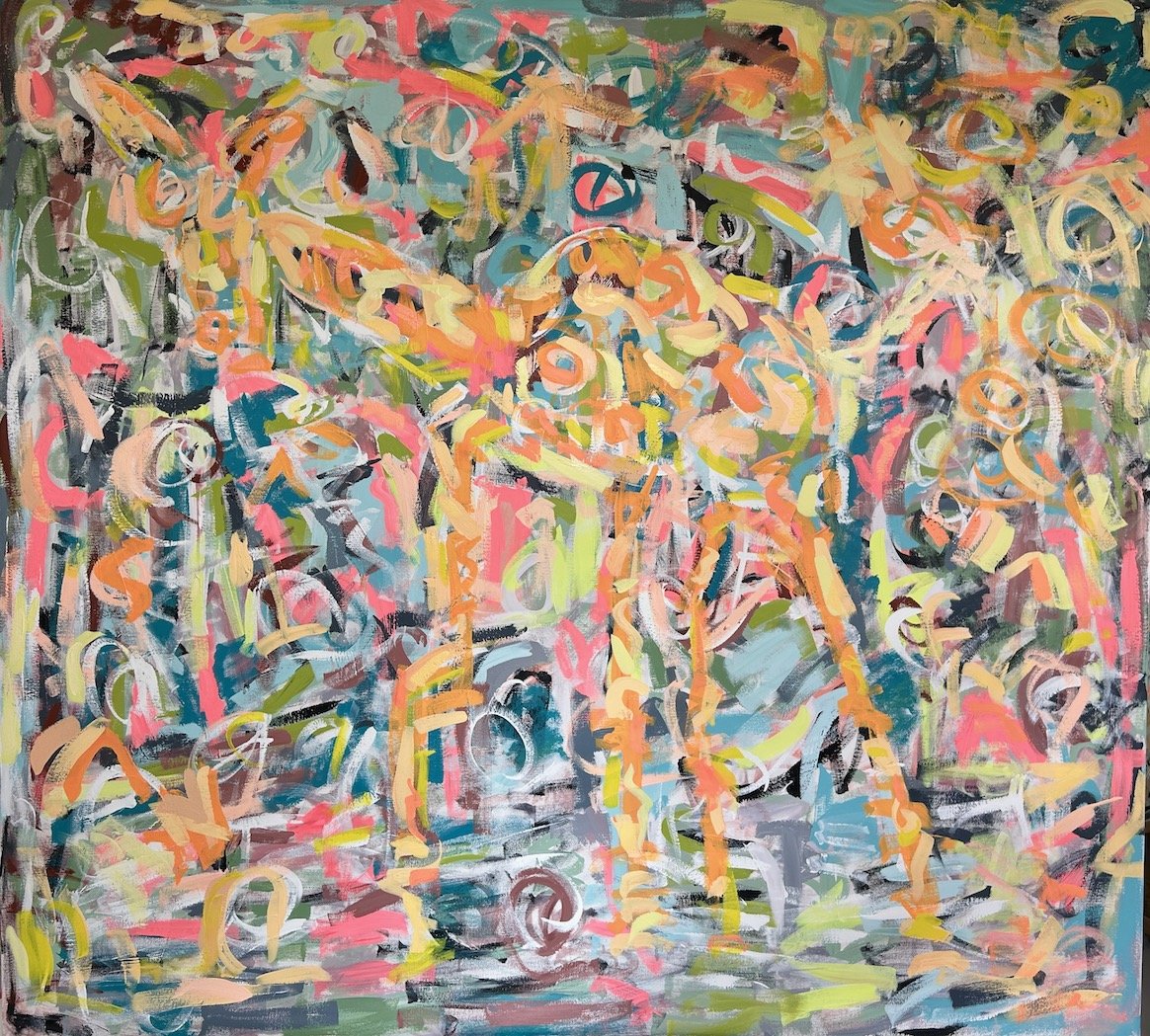
I truly felt like a baby calf trying to walk for the first time. You think of firefighters as strong and brave, but how do they get there? How does a giraffe learn to walk so tall?
Unlike in the art world, I have learned that every firefighter wants me to be better. There may be egos and different methods, from old-school tactics to more gentle approaches. There is ego, but they are all on the collective mission to save lives, and there is always room for improvement when you are confronted with science, physics, life, and death. That is what I love about walking into the fire department: the sense of earned potential.
In those first moments, I was undecided if I would quit, confronted with the second half of my life. This room for constant improvement, this teamwork, this camaraderie, I had missed it from my youth. I can feel a void filled where I missed being on a sports team, sharing common goals and a life beyond the phone, pushing yourself and each other, and laughing beyond memes.
It has been less than ninety days, but my sense of time and sound has shifted since joining. I no longer have that anxiety of entering the station. Leadership has repeatedly asked how they can improve trainings: “We have to be better.” That takes pressure off me. This collective matters. Our gear is literally designed to lift each other up if needed.
I recently noticed during maintenance night that the primary thermal imaging camera (TIC) was only charging when the truck was running. I remember the lessons about the learning curve, but nobody explains how much emotional pressure must be calibrated to achieve those next steps. What is lost if we always avoid embarrassment? What is gained if we are willing to expose ourselves to that unstable state of emotional internal chatter?
When I came back at 9:40pm on a Wednesday in September, my mind was buzzing, humming, vibrating at a tone I cannot recall ever experiencing. The overwhelming stimulation of sound, light, screams, and physical exertion was gone. I felt like a wounded animal, regrouping and rewriting my DNA to avoid the mistakes of the night so I could survive. Once I donned turnout gear, I entered a new world. I felt like an astronaut, a very sweaty astronaut, on a September night with humidity piercing my skin, trapped in my space-suit layer of fire and steam protection. It was the most uncertain I had ever been. I knew that I knew nothing. My ego and accomplishments as an artist was meaningless. I was experiencing a psychological death and rebirth, as well as an escape hatch to step away from the artist to become party to community through selflessness.
What do we lose if we only live for likes and consistency, afraid to break our equilibrium of unplanned routines? When was the last time you felt deep embarrassment? After I came home, I started painting Learning to Walk, and woke up the next day using that leftover source of energy again. I have painted giraffes before. They are fun, funny-looking, marvelous outliers of evolution, but this time I made sure to paint them tall and to paint the metaphor of wobbling legs. Though it was not intentional at first, it became deliberate when I reached the legs. I wanted to show the giraffe before it could walk. I needed it. There was so much emotion to process. If I’m going to make it through probation, I have to learn how to walk.
Learning to Walk, 70x76 inch acrylic on canvas, Kasey Child 2025